



A dentist on the front lines is more than a doctor
With the outbreak of full-scale war, dentists found themselves not only in offices, but also in dugouts, hospitals, and volunteer centers. Many of them went to serve, created mobile clinics, and opened free appointments for military personnel and displaced persons. Their contribution is invaluable: timely treatment reduces infectious complications and preserves combat readiness.

Closed offices, destroyed equipment – how to survive?
Thousands of dental clinics found themselves in the war zone or were forcibly evacuated. They lost premises, equipment, and patients. However, the industry did not stop. Thanks to the unification, donor assistance, and support from colleagues from the Union and charitable organizations, some clinics were restored or relocated to safe regions.
New request — military rehabilitation
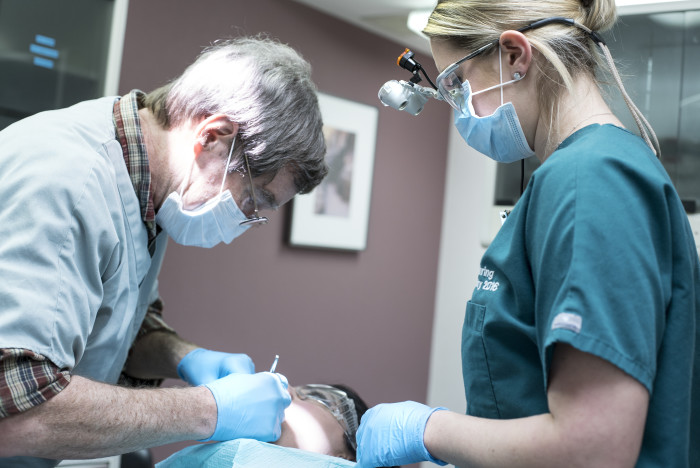
Dentistry during the war was not only about treating caries. A new direction appeared: prosthetics, jaw restoration after injuries, implantation for veterans. This is a separate, extremely important branch of dental work, which requires special knowledge, tools, and psychological endurance.
Patients have changed — so has practice
People began to come with protracted neglected cases – due to stress, lack of funds or fear. Dentists adapted their approaches: they introduced installment plans, humanitarian initiatives, and on-site consultations. Psycho-emotional contact with the patient became as important as the technique of execution.
A time of unity and support
In the darkest times, light appears. The dental community has united: they help each other with equipment, refer patients, share experiences. Right now, it is especially important to be part of an organization that stands guard not only over the profession, but also over humanity. The Ukrainian Dental Association is an example of such a power of unity.